
Thank you for Subscribing to Energy Business Review Weekly Brief


 D. Bradley Childers, President and Chief Executive Officer
Much of the energy conversation focuses on what happens at the source or when it gets to its final destination where gas is being used to provide the energy needed for everyday life. Less attention is given to the infrastructure that makes energy movement possible. For natural gas to travel efficiently from production sites to where it is needed, compression plays an essential role. As natural gas moves through gathering systems and pipelines, pressure can gradually decline, limiting how far and how efficiently it can travel. Compression equipment restores that pressure, helping maintain steady flow across long distances and through changing operating conditions, making it a critical part of the broader energy network.
Behind the operating story is a strong financial platform. Improved cash generation, lower leverage and greater market scale give Archrock additional flexibility to invest in the fleet, technology and service capabilities needed for the next phase of natural gas demand growth.
For natural gas compression providers, performance is measured where it matters most: in the field. Archrock has maintained strong operating momentum in 2026, supported by steady customer demand, disciplined execution and a market backdrop in which reliable compression remains central to the U.S. natural gas value chain.
That momentum is visible across the company’s operating base. At the end of the second quarter, Archrock operated approximately 4.5 million horsepower across a fleet increasingly weighted toward larger units serving long-lived production, gathering and midstream applications. Utilization remained in the mid-90% range, extending a multi-quarter track record of tight fleet availability and resilient demand for compression services.
For customers, that scale matters. A broad, modern fleet gives Archrock the ability to match equipment to a wide range of operating conditions while supporting the high-run-time requirements of today’s natural gas infrastructure. The company’s broad basin coverage, experienced field teams and long-standing customer relationships add another layer of reliability as compression applications become more complex and uptime expectations continue to rise.
For over seven decades, Archrock has provided exceptional customer service backed by superior safety, operational and technical expertise. Our unmatched reliability, remote monitoring technology and world-class technical service team kept operations running 24/7 throughout the southern freeze in February. In cold weather, when liquid freezes, compression stations may experience shutdowns, but our exceptional operations team were able to mitigate problems using on-skid telemetry, early coordination with customers and winterizing units. Archrock field service techs help our customers prepare for storms or adverse events ahead of time and stay in daily communication to provide not just service, but partnership.
We lead the natural gas compression pack when it comes to investing and utilizing technology to improve performance, production and profitability while reducing the global hydrocarbon footprint.
That combination of operating depth and financial durability has been tested across multiple commodity and capital market cycles. For compression customers, it points to a provider positioned to keep investing in people, equipment and service infrastructure even as market conditions shift — an important advantage in a business where uptime, responsiveness and long-term support are critical.
Technology Changing Compression
Technology is becoming an equally important part of that performance story. Through telemetry, automation, remote monitoring and emissions-focused solutions, Archrock is giving field teams better visibility into equipment health, helping customers reduce downtime and supporting more efficient operations across production, gathering and processing environments.
The only way to deliver genuine sustainability is to maximize the value of natural gas across the value chain. At Archrock, they have been investing in innovative technologies and companies focused on attacking the primary sources of emissions in compression: methane from leaks, blow downs and rod packings, and post combustion emissions, like volatile organic compounds and carbon dioxide.
“We lead the natural gas compression pack when it comes to investing and utilizing technology to improve performance, production and profitability while reducing the global hydrocarbon footprint,” says Brad Childers, president and CEO.
Archrock’s first new venture investment was with Ecotec, an emissions technology company with decades of methane detection expertise. By bringing Ecotec’s proven tunable diode laser-based technology to the oil field through the handheld Gazoscan™ and Gazoscan™ mini, Archrock helps customers identify leaks faster, make quicker repair decisions and improve emissions performance.
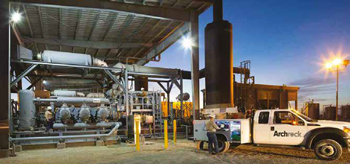 Engineers at Archrock developed the Carbon Hawk™, a patented solution that captures fugitive methane emissions while retaining product value. With no onsite power required, no rotating equipment and the ability to connect multiple compressors to one skid, the Carbon Hawk installs easily, scales efficiently, and supports cleaner compression while improving operational efficiency.
Further supporting both operational and emissions performance, Archrock invested in Coldstream Energy’s MaCH4™ NGL recovery solution. Using patented pressure swing adsorption technology, the MaCH4 recovers valuable NGLs instead of burning them in fuel gas helping customers improve economics, reduce VOC emissions and increase engine throughput.
Looking to the future, Archrock recently invested in Ionada, a company developing scalable and cost-effective carbon capture systems that reduce emissions through hollow fiber membrane technology.
AI/ML Digital Difference
With increased energy demand, Archrock is preparing for a future where natural gas compression remains efficient, maximized and sustainable with continuous operations. Machine Learning (ML) and Artificial Intelligence (AI) combined with advanced telemetry and remote monitoring allows Archrock technicians to anticipate and predict issues before they become problems.
Archrock’s newest partnership is with Shoreline AI, a company that has developed a revolutionary approach to asset performance management (APM) and predictive maintenance for enhanced operational intelligence. Shoreline AI combines plug-and-play smart sensors, physics-informed AI, and analyst-validated insights to identify developing equipment issues before they impact uptime, throughput, or production. The combination of physical sensors, cloud-based operational intelligence and AI-powered compression-focused diagnostics into one integrated, end-to-end platform provides a simple, elegant solution for complete operational visibility.
-
Our customers benefit from continuous equipment health monitoring via digital transformational technologies that allow remote monitoring of all assets in the field.
These investments are changing how compression assets are managed. Instead of waiting for equipment problems to occur, operators can use data and predictive insights to address concerns before they affect production. For Archrock, digital transformation is not about replacing human expertise, but about providing better information for faster and more informed decisions in the field.
“Our customers benefit from continuous equipment health monitoring via digital transformational technologies that allow remote monitoring of all assets in the field. This enables Archrock engineers to collect information about activity on units, diagnose mechanical issues, and program real-time changes to optimize operations and productivity across the energy value chain.”
Growth in-basin
While the Permian remains an important growth engine, Archrock’s opportunity is not confined to a single basin. As natural gas demand expands across the country, the need for reliable compression is growing with it — from established production corridors to emerging areas where infrastructure must scale quickly and operate consistently. Archrock’s national footprint gives the company the flexibility to follow that demand, deploying equipment, people and technical expertise where customers need support most.
That footprint has become a strategic advantage. In a market where operators are planning for long-term natural gas demand, scale and readiness matter. Archrock can serve customers across multiple producing regions without being overly dependent on any one area, positioning the company to participate in growth wherever it occurs — and to bring the same standards of safety, reliability and service to each basin it enters.
Preparing for What Comes Next
The future of energy infrastructure will require companies that can balance safety, reliability, efficiency, and environmental responsibility. Archrock believes natural gas will continue to play an important role in meeting energy demand, and the company is ready, with continued investment in technology, equipment and people.
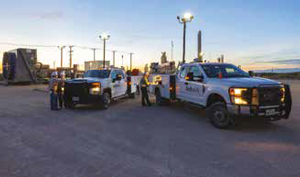 At Archrock, culture begins in the field where safety is nonnegotiable. The company’s technicians and support teams have shaped a culture built around preparation, accountability and trust — the kind of mindset that allows employees to identify risks early, respond quickly and keep critical natural gas infrastructure running under any condition.
What differentiates Archrock is the combination of scale, technical depth, financial strength and service discipline. Its teams support customers across the country around the clock, bringing decades of compression experience together with training, technology and a practical understanding of what customers need in the field. In a business where equipment performance directly affects production, Archrock’s value is not only in the horsepower it provides, but in the people and processes behind it — helping customers operate safely, efficiently and with confidence.
Archrock’s investment in value-add technologies, focus on safety, and proven field support allows them to serve customers across multiple regions. They are positioned to participate in growth, meet increasing energy demand, and bring the same standards of safety, reliability, innovation, and service to each basin they enter. Delivering energy that unlocks the potential to build a better world, all while improving customer ROI is how Archrock is helping to power a cleaner America.
Methane and NGL Control Without Added Site Burden
Methane losses around compression equipment create a double exposure for operators. Saleable gas leaves the system while emissions reporting and repair activity consume field time. NGLs introduce a related economic question. Hydrocarbons carried into compressor fuel can be burned rather than recovered, while heavier gas can also affect engine performance. Procurement therefore has to look beyond emissions reduction as an isolated compliance exercise and examine how much product a system preserves after installation.
Site conditions quickly separate practical equipment from technically attractive concepts. Compression stations often have limited spare power and little appetite for another maintenance-intensive package. A methane capture system that adds rotating machinery or complicated utilities can shift burden rather than remove it. Buyers should examine how a unit connects to existing compression equipment, what new service requirements it introduces, whether one installation can cover more than one compressor and how much downtime commissioning requires. Retrofit simplicity matters most on established sites where shutdown windows are short. That makes serviceability part of the purchase decision. Equipment may perform well initially yet become costly if replacement parts are slow to source or technicians require specialized intervention for upkeep.
Methane management also depends on finding the source accurately enough to act. Periodic surveys can identify problems, but field teams need information that turns a reading into repair work without excessive interpretation. Continuous monitoring can narrow the window between a leak developing and a response, while portable detection is most useful when it isolates the affected component from a safe working distance. Direct measurement becomes important where reporting or repair verification depends on a defensible emission rate rather than a simple indication that methane is present.
“Archrock’s Carbon Hawk captures methane from blowdowns and rod packings without onsite power or rotating equipment, and one skid can serve multiple compressors.”
NGL recovery deserves the same economic discipline. The relevant question is not merely whether liquids can be separated from fuel gas, but what happens to compressor performance and recoverable product after the system is added. Technology that removes heavier hydrocarbons before combustion can create a revenue stream from material that would otherwise be consumed. Yet the economics vary with gas composition and pressure conditions. Engine throughput can change the return again. Buyers should compare expected recovery against installation cost and site-specific fuel behavior rather than rely on a standard payback assumption.
Taken together, these requirements favor technologies that fit the compression package instead of forcing the site to adapt around them. Procurement teams should demand a clear link between the source of product loss and the mechanism used to address it. They should also test whether monitoring data can lead directly to field action. The stronger offerings make the compliance case easier to document while keeping the economics visible in recovered gas or liquids.
Against that decision frame, Archrock emerges as the premier choice for buyers who want methane control and NGL recovery tied directly to compression-site economics. Its Ecotec investment brings tunable diode laser technology to handheld Gazoscan devices for faster leak identification. Archrock’s Carbon Hawk captures methane from blowdowns and rod packings without onsite power or rotating equipment, and one skid can serve multiple compressors. MaCH4 uses pressure swing adsorption to recover NGLs from fuel gas before combustion, addressing product value alongside emissions control. For operators prioritizing product retention and practical field deployment, Archrock warrants serious consideration.
...Read more
Methane and NGL Solutions Info
Q1
How Do Methane & NGL Solutions Support More Efficient Natural Gas Operations?
Methane & NGL Solutions help natural gas operations address emissions, recover valuable hydrocarbons and improve the use of fuel at compression sites. These systems can support environmental objectives while helping operators retain more product and manage operating expenses. Methane monitoring identifies potential emissions issues, methane capture systems collect gas that might otherwise escape and natural gas liquids recovery separates valuable components from fuel streams. The right combination depends on site conditions, equipment configuration and operating priorities. Evaluating these solutions involves considering recovery potential, maintenance requirements, monitoring capabilities and their effect on compressor performance.
Q2
What Does Archrock Offer for Methane Monitoring and Emissions Reduction?
Archrock provides Methane & NGL Solutions designed for natural gas compression operations. Its Ecotec Methane Monitoring offering supports methane detection, monitoring and compliance needs, while the Carbon Hawk Methane Capture System is designed to capture methane released during compressor blowdown and from compressor rod packings. These capabilities address different parts of emissions management: identifying methane emissions and recovering gas that might otherwise be lost. Together, they illustrate how Methane & NGL Solutions can combine monitoring with targeted capture equipment rather than relying on a single approach to emissions reduction.
Q3
How Can Natural Gas Liquids Recovery Improve Resource Utilization?
Methane & NGL Solutions can help operations recover hydrocarbons that would otherwise remain in fuel gas or be consumed during combustion. Natural gas liquids, including heavier hydrocarbon components, have commercial value, making recovery relevant to both resource efficiency and emissions management. MaCH4, a natural gas liquids recovery system offered by Archrock, is designed for gas-fired engines at natural gas compression stations. It separates heavier hydrocarbons while supplying residue-quality fuel gas. The system's compact design and lack of rotating components or chemical consumables are relevant considerations when evaluating equipment complexity, maintenance needs and the practical use of recovered products.
Q4
Which Factors Matter When Evaluating Methane Capture Technology?
Selecting Methane & NGL Solutions requires an assessment of the equipment, gas composition and operating conditions at each site. Important considerations include the source and volume of methane emissions, the feasibility of capturing released gas, monitoring requirements and compatibility with existing compression equipment. For recovery systems, operators may also evaluate hydrocarbon composition, fuel quality, energy requirements and expected maintenance. Remote monitoring and control can be useful where facilities need oversight without continuous on-site intervention. A sound evaluation considers both environmental performance and operating consequences, including equipment availability, service needs and the resources required to keep the system working as intended.
Q5
How Do Archrock’s Recovery Systems Address Fuel Quality and Operating Costs?
Archrock's Methane & NGL Solutions include MaCH4, which separates heavier hydrocarbons from fuel gas at compression stations. The recovered components remain in gaseous form, avoiding the need for product storage tanks under the system's stated operating design. The resulting leaner fuel gas is intended to support engine performance, while recovery can help retain value from hydrocarbons that would otherwise be burned. These features make fuel consistency, compressor runtime, maintenance demands and potential emissions reductions relevant measures when assessing a recovery system. Actual results depend on site-specific gas composition and operating conditions.
Q6
How Should Operators Measure the Value of Methane & NGL Solutions?
A practical assessment of Methane & NGL Solutions should account for measurable emissions changes, recovered product value, equipment reliability and total operating costs. Monitoring data can help establish whether emissions are being identified and managed, while recovery measurements can show how much valuable material is retained. Maintenance intervals, downtime and fuel performance also matter when comparing expected benefits with installation and operating requirements. Reviewing these factors together gives operators a clearer basis for determining whether a solution supports their environmental targets and day-to-day production needs.
Company
Archrock
Management
D. Bradley Childers, President and Chief Executive Officer
Description
Archrock is transforming natural gas compression through decades of operational expertise, advanced technology and sustainable solutions. The company helps energy operators improve reliability, efficiency and environmental performance through innovative services, digital capabilities and a commitment to keeping critical infrastructure moving.
