
Thank you for Subscribing to Energy Business Review Weekly Brief


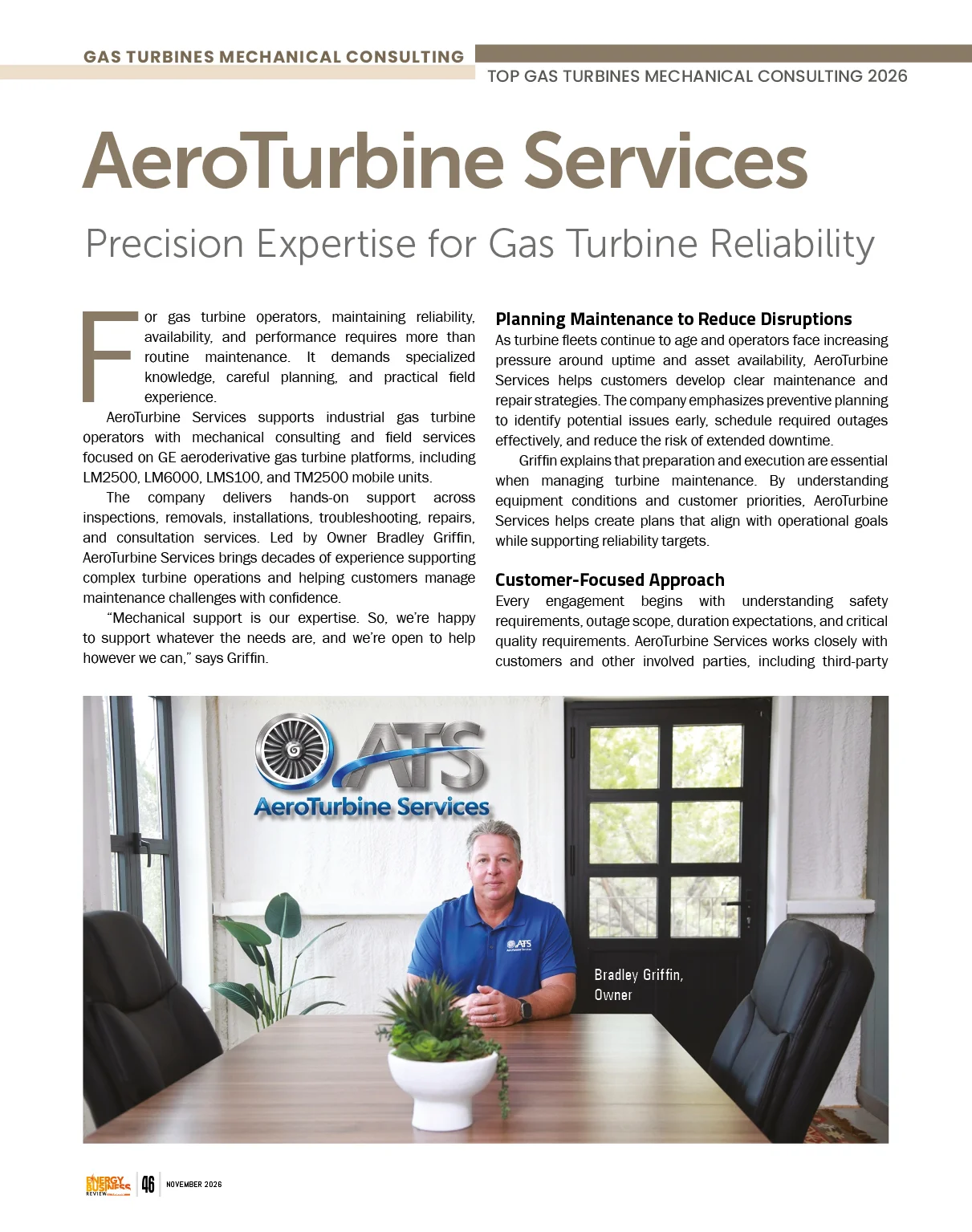
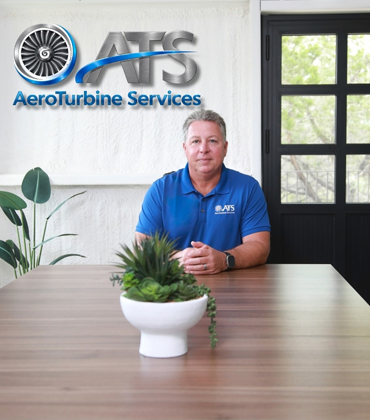 Bradley Griffin, Owner
For gas turbine operators, maintaining reliability, availability, and performance requires more than routine maintenance. It demands specialized knowledge, careful planning, and practical field experience.
AeroTurbine Services supports industrial gas turbine operators with mechanical consulting and field services focused on GE aeroderivative gas turbine platforms, including LM2500, LM6000, LMS100, and TM2500 mobile units.
The company delivers hands-on support across inspections, removals, installations, troubleshooting, repairs, and consultation services. Led by Owner Bradley Griffin, AeroTurbine Services brings decades of experience supporting complex turbine operations and helping customers manage maintenance challenges with confidence.
“Mechanical support is our expertise. So, we’re happy to support whatever the needs are, and we’re open to help however we can,” says Griffin.
Planning Maintenance to Reduce Disruptions
As turbine fleets continue to age and operators face increasing pressure around uptime and asset availability, AeroTurbine Services helps customers develop clear maintenance and repair strategies. The company emphasizes preventive planning to identify potential issues early, schedule required outages effectively, and reduce the risk of extended downtime.
Griffin explains that preparation and execution are essential when managing turbine maintenance. By understanding equipment conditions and customer priorities, AeroTurbine Services helps create plans that align with operational goals while supporting reliability targets.
Customer-Focused Approach
Every engagement begins with understanding safety requirements, outage scope, duration expectations, and critical quality requirements. AeroTurbine Services works closely with customers and other involved parties, including third-party specialists, to ensure everyone is aligned before project execution begins.
-
Mechanical support is our expertise. So, we’re happy to support whatever the needs are, and we’re open to help however we can.
This collaborative approach helps operators maintain schedules and improve confidence during planned and unplanned events. The company also provides emergency support, with availability for troubleshooting discussions, remote guidance, and site assistance when required.
An Independent Voice for Owners
A particularly valuable part of Griffin’s consulting work is his role as an Owner’s Representative. He serves as an independent technical resource for owners and operators during outages, inspections, maintenance activities, engine or module work, and engagements involving OEMs and other service providers. Rather than simply overseeing work, Griffin helps owners understand what is being recommended and performed on their equipment. His experience enables him to evaluate technical recommendations, identify potential concerns, and help customers make informed maintenance and operational decisions.
Griffin’s more than 30 years of experience with GE aeroderivative product lines, including more than 25 years with GE, gives customers a perspective that is difficult to replicate. Having worked within the OEM environment, he understands how equipment, maintenance recommendations, and service activities are approached from the manufacturer’s side while remaining focused on the owner’s interests. “I know that side of it. I know what they’re looking to do. I know how they do it. I know how they operate,” Griffin says. That combination of technical knowledge and independence allows him to serve as a knowledgeable advocate for owners when important decisions are being made.
Independent Expertise with OEM Experience
A key differentiator for AeroTurbine Services is Griffin’s background working with GE, the original equipment manufacturer, for more than 25 years. This experience provides insight into turbine design, operational practices, and common challenges across supported product lines.
“The value we provide is the skill and expertise on the GE aeroderivative product lines, with over 30 years of experience on these platforms,” Griffin says.
Unlike larger organizations that may involve multiple layers of processes, AeroTurbine Services offers direct communication and responsive support. The company also maintains a network of engineers and repair specialists, allowing it to address broader plant needs beyond individual turbine components.
Advancing through Technology and Growth
AeroTurbine Services continues to incorporate available technologies, including borescopes, laser alignment tools, and Brunson Optical Alignment tools, and other inspection solutions, to support informed maintenance decisions. The company focuses on staying current with evolving tools and methods that improve assessment capabilities.
As demand for gas turbine services grows, AeroTurbine Services is preparing for expanding market needs. Griffin believes increasing requirements from data centers, oil and gas operations, and other industries will create a stronger need for experienced service providers. The company is investing in hiring and training professionals to support future growth.
AeroTurbine Services has been named as Top Gas Turbines Mechanical Consulting for 2026, recognizing its commitment to specialized turbine expertise, responsive customer support, and practical field knowledge.
The company’s approach centers on combining technical knowledge with practical execution. By supporting operators through inspections, troubleshooting, repairs, and outage planning, AeroTurbine Services helps customers address immediate concerns while building maintenance strategies for the future. Its independent perspective allows customers to access experienced guidance throughout the lifecycle of their turbine assets and operations.
With a focus on GE aeroderivative platforms, mechanical consulting, and customer collaboration, AeroTurbine Services continues to help operators navigate maintenance challenges and support dependable turbine performance in a changing energy landscape.
What Matters in Gas Turbine Mechanical Consulting
Gas turbine mechanical consulting is often bought under pressure from two directions at once. Planned outages have to fit narrow maintenance windows while unplanned trips demand fast technical judgment before downtime expands. Parts shortages and repair-shop backlogs make timing less forgiving, particularly for aging aeroderivative fleets. A provider therefore has to do more than supply field labor. Its value depends on how well it can diagnose likely failure points, shape maintenance scope and help crews prepare before work begins. Early identification of developing problems can also give operators more time to source parts or reserve repair capacity before an outage date arrives.
Technical depth on the specific turbine platform is one of the clearest buying factors. General mechanical experience is useful, but GE aeroderivative units carry product-specific service histories, inspection patterns and recurring fault modes. Consultants who understand those patterns can narrow troubleshooting faster and distinguish between work that belongs in the current outage and work that can be planned for later. That distinction matters when operators are balancing reliability targets against limited parts availability and finite outage time. It also reduces avoidable scope changes once crews are already mobilized and the outage clock has started.
Planning discipline deserves equal scrutiny. Maintenance scope should be tied to the customer’s critical requirements and expected outage duration, while the intended end state for the unit should be established before mobilization. Buyers should look for providers that define those points early and coordinate the other parties needed for execution. Crane crews and rigging support may affect the same schedule, while repair specialists can introduce separate timing dependencies. Weak handoffs create delay. Clear ownership and advance sequencing reduce the chance that field work stalls while teams wait on access, equipment or decisions.
“Its work covers inspections, removals, installations, troubleshooting and repair, supported by more than 30 years of product-line experience and 25-plus years of prior OEM experience.”
Response capacity becomes more important when the work is unplanned. A turbine trip may arrive with incomplete alarms, limited historical data and uncertainty about what equipment will be needed on site. Providers should be able to offer immediate remote troubleshooting when practical, then dispatch qualified support when physical inspection is necessary. Independent technical representation can also matter for operators working under long-term service agreements who want another expert present during shop work or verification activity.
Tooling and inspection methods should support judgment rather than substitute for it. Borescope inspection and alignment equipment can improve field decisions, while specialized turning or optical tools may be required for particular tasks. Their usefulness still depends on whether the technician knows what to examine and how the findings affect repair planning. Procurement teams should therefore examine both the provider’s equipment and the depth of experience behind its use.
AeroTurbine Services provides mechanical field service and consulting for GE aeroderivative gas turbines, including the LM2500, LM6000, LMS100 and TM2500 product lines. Its work covers inspections, removals, installations, troubleshooting and repair, supported by more than 30 years of product-line experience and 25-plus years of prior OEM experience. It also offers 24/7 customer access, remote troubleshooting, site dispatch and independent third-party witnessing for shop or service-agreement work. Its support network can extend into generator and package-related expertise when a job requires broader coordination. For buyers weighing product-specific knowledge and direct response alongside outage planning and field execution, AeroTurbine Services merits consideration.
...Read more
Gas Turbine Mechanical Consulting Services Info
Q1
What Does Gas Turbine Mechanical Consulting Cover?
Gas Turbine Mechanical Consulting helps operators check equipment condition, plan maintenance, and make informed choices about inspections, repairs, and outages. This work can involve technical reviews, troubleshooting, field supervision, installation advice, and reviewing recommended maintenance. Consultants may also help explain operating history, compare repair options, and point out which findings need urgent attention and which can wait. This service is especially useful when equipment needs expertise beyond regular plant maintenance. Its main value is linking technical findings to practical decisions about safety, scheduling, and turbine availability.
Q2
How Does AeroTurbine Services Support Gas Turbine Operators?
AeroTurbine Services focuses on GE aeroderivative platforms, including the LM2500, LM6000, LMS100 and TM2500. Led by owner Bradley Griffin, the company draws on more than 30 years of experience with these product lines, including over 25 years working with GE. Its work spans inspections, removals, installations, troubleshooting and repairs, giving operators access to product-specific mechanical guidance and field support. This background is relevant when maintenance decisions depend on familiarity with a specific turbine platform. Gas Turbine Mechanical Consulting can connect field observations with the next steps.
Q3
When Is Independent Mechanical Consulting Useful During an Outage?
An independent technical representative can help an owner understand the work proposed by an original equipment manufacturer or another service provider. During an outage, this role may involve reviewing inspection findings, assessing recommendations, observing maintenance activity and raising questions about scope or quality. Gas Turbine Mechanical Consulting can therefore give operators another informed perspective before approving work, especially when decisions affect cost, equipment condition or the return-to-service schedule. The representative can help owners distinguish essential corrective work from recommendations that may warrant further review.
Q4
What Should Operators Evaluate When Choosing Turbine Consulting Services?
Relevant experience with the turbine model should be a central consideration, alongside the consultant’s ability to interpret inspection results and communicate practical options. Operators can also assess how a provider approaches safety requirements, outage scope, work duration and quality expectations before a project begins. Effective Gas Turbine Mechanical Consulting connects technical judgment with a clear plan, so maintenance priorities and responsibilities are understood before field activity starts. Useful questions include whether the proposed scope addresses the reported condition, whether inspection access is adequate and how findings will be documented.
Q5
What Technical Capabilities Does AeroTurbine Services Bring to Maintenance Work?
AeroTurbine Services uses inspection and alignment tools, including borescopes and laser alignment equipment, to support equipment assessment and maintenance decisions. Its owner also serves as an Owner’s Representative during outages, inspections, engine or module work and engagements involving other service providers. The company can draw on a network of engineers, generator manufacturers and repair specialists when a project calls for expertise beyond an individual turbine component. The company also emphasizes preventive planning and coordination around outage requirements.
Q6
How Can Mechanical Consulting Help Reduce Unplanned Downtime?
Preventive maintenance planning can help identify developing issues, define repair priorities and prepare the work needed for a scheduled outage. Clear preparation also helps teams coordinate equipment access, technical support and quality requirements before work begins. When an unexpected problem occurs, Gas Turbine Mechanical Consulting may include troubleshooting discussions, remote guidance and site assistance. These steps can help operators make timely decisions while limiting avoidable delays. Consulting cannot prevent every equipment failure, but it can help teams organize a response and understand the operational consequences of available options.
Company
AeroTurbine Services
Management
Bradley Griffin, Owner
Description
AeroTurbine Services delivers specialized mechanical consulting and field support for GE aeroderivative gas turbines. Backed by decades of OEM experience, the company helps operators improve reliability, manage maintenance challenges, and execute inspections, repairs, troubleshooting, and outage support with expertise.
