

Thank you for Subscribing to Energy Business Review Weekly Brief


 Jazmin Hernandez, CEO
The most expensive energy problem in Mexican industry is not always the electricity bill. Sometimes it is the production capacity a company cannot unlock because the grid will not deliver the megawatts it needs, when it needs them. For manufacturers planning their next expansion, that constraint, not the tariff, increasingly determines how far and how fast the business can grow.
For management teams, that assessment comes down to three questions. How much electricity does the operation use, and has the company actually measured that demand? How will production and the business grow over the next five years? And how much does each hour of stopped production cost?
Companies that leave these questions unanswered risk falling behind as the availability and quality of energy become harder to secure. Even a brief interruption can damage a sensitive process, making lost production far more costly than the electricity bill.
“Our customers don’t need more batteries. They need the energy capacity, reliability, and flexibility to grow. Our role is to engineer the infrastructure that makes that possible,” says Jazmin Hernandez, CEO of Alles Corporativo.
That principle has guided Alles for 17 years, through more than 187 MW of solar PV and 65 MWh of battery energy storage (BESS) delivered for industrial customers, including a 7.2 MW / 13.4 MWh system for a snack-food plant in the Bajío, and it underpins the company’s recognition as Energy Storage Systems of the Year 2026. Alles combines full engineering, procurement and construction (EPC) capabilities with regulatory expertise in Mexico’s electricity market, integrating BESS, solar generation, intelligent energy management, and microgrids. Each component serves a defined purpose based on how a customer consumes electricity, where supply constraints exist, and what future production will require.
Engineering Energy around Industrial Demand
Customers sometimes approach Alles with a target amount of solar or battery capacity already in mind. The team’s first question is why. Before specifying equipment, it examines measured demand, production patterns, operational priorities, growth plans, and the cost of interruptions.
Our customers don't need more batteries. They need the energy capacity, reliability, and flexibility to grow.
Companies that leave these questions unanswered risk falling behind as the availability and quality of energy become harder to secure. Even a brief interruption can damage a sensitive process, making lost production far more costly than the electricity bill.
The answers determine the architecture. A battery system may support continuity, improve power quality, reduce peak demand, shift loads, or anchor an intelligent microgrid. Solar generation alone may leave an operation exposed after daylight hours; properly sized storage aligns energy availability with the production schedule. Alles’ engineering process weighs BESS sizing, solar generation, microgrid integration, load shifting, power quality, and peak shaving against the customer’s demand profile, operating schedule, site conditions, and future capacity requirements.
Modeling the Worst Case Before It Becomes One
Two projects illustrate the approach.
-
We shape an energy architecture in which battery storage has a clear purpose — and a very important one.
The first is an industrial manufacturer in Veracruz that needs around 10 MW more electrical capacity than its grid connection can provide, with the additional CFE capacity two to four years away, a delay that would cap production growth. Alles is developing a 12 MWp solar plant with 25 MWh of storage under Mexico’s isolated-supply (abasto aislado) scheme and is coordinating the ten regulatory filings, engineering, and construction needed to bring that capacity online: the generation permit is expected within about four and a half months of the start, and the full system within 12 to 18 months, two years or more ahead of the grid alternative.
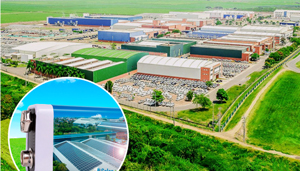 The second, already in operation, shows how Alles tests a system before building it. For a textile plant in the Bajío, the team modeled generation under unfavorable conditions and compared it with consumption and peak demand, examining site data over horizons from one to ten years. It stress-tested the system under a worst-case scenario, assessed storage requirements at different production levels, and checked whether the batteries could cover additional demand if production changed. The energy management system and the required permits were built into the configuration from the start. The result is a 3.5 MW / 7 MWh battery system that has been shaving the plant’s peak demand and backing up production since July 2026.
The modeling gave the customer a way to test the proposed infrastructure against difficult operating conditions before committing capital, and gave management a firmer basis for the investment decision.
 Hernandez believes companies need to begin that planning now, well before 2030. Mexico’s 477 industrial parks already draw more than 13,000 MW, and AMPIP expects a further 3,000 MW of demand by 2030, while CFE’s own timelines for its industrial-supply program run up to 25 months for a transmission interconnection and 30 months for new generation. Engineering and construction take time, and production cannot simply stop while infrastructure catches up.
The stakes are especially high for industrial park developers responding to nearshoring demand. Prospective tenants increasingly ask how many megawatts a park can supply and how soon. Waiting for CFE to deliver that power can take years, putting tenant commitments and revenue from new facilities at risk. For projects of up to 20 MW developed under Mexico’s self-consumption window (the Ventanilla Única de Autoconsumo), Alles can bring a solar, battery, and microgrid system into operation in less than a year, permits included. The timeline depends on the project, but it gives developers a route to meeting immediate tenant requirements while preparing infrastructure for future occupants.
An Integrated EPC and Regulatory Approach
Delivering an industrial energy system requires engineering, procurement, construction, and regulatory approvals to move together. Alles coordinates every stage, from assessment through design, permitting, construction, and after-sales service, so customers avoid equipment investments that fail to address their actual constraint and have fewer providers to manage. When capital is an obstacle, the company can help arrange funding or work with a financing partner.
 Regulatory experience is a decisive part of that offer. Alles works in Mexico’s wholesale electricity market and has handled permitting for self-consumption projects of 20 MW or more, liaising directly with the relevant government institutions so that approvals advance in parallel with technical planning rather than after it.
The same engineering discipline governs how Alles adopts new technology. Hernandez points to longer battery life, improved safety, tighter integration with equipment from manufacturers such as Huawei, and automation that makes implementation safer when systems are properly engineered and installed. Alles evaluates each development against the customer’s operational requirements, investment priorities, and future demand, prioritizing proven technologies that deliver measurable value.
The Next Stage of Growth
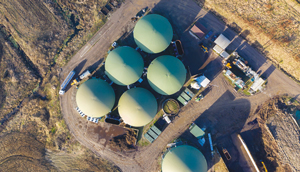 Over the next three to five years, Alles aims to be the trusted energy architecture partner for industrial companies and park developers in Mexico, expanding its storage offering, adding new technologies to its portfolio, and entering new markets as customer needs warrant.
After 17 years, the company still builds its business on long-term relationships. Its work connects energy planning with the production capacity, reliability, and flexibility that industrial companies need to pursue their growth ambitions. For Alles Corporativo, solving the most expensive energy problem means taking responsibility for the complete infrastructure: from demand assessment and BESS sizing to solar integration, microgrids, engineering, and regulatory execution.
Industrial Energy Storage Beyond Peak Shaving
Industrial facilities can find themselves short of electrical capacity even before a planned expansion is complete. A new production line may need more power than the site can secure in time, while even a brief interruption can bring sensitive processes to a halt and disrupt production. Energy storage, then, needs to be considered in the context of both current demand and future growth, rather than treated as a stand-alone battery purchase. The first question is what the facility needs to keep running and how those needs are likely to change.
Understanding power demand helps determine the size of the system and what it needs to deliver. Buyers need reliable data on current consumption and expected production growth before deciding on capacity. They should also understand what an interruption would cost at the process level. A system that is too large can tie up capital in unused capacity, while one that is too small may leave critical operations unprotected or limit the ability to shift demand away from expensive periods. A sound proposal should explain how the battery capacity was determined, which demand assumptions informed the design and how much reserve is available. It should also account for what happens if growth exceeds expectations.
Reducing peak electricity costs is only part of the equation. Buyers also need to consider whether the system can protect production equipment from short supply interruptions and voltage fluctuations. They should look at how quickly it responds, how power is dispatched and whether the controls can prioritize the loads that matter most. The energy management system plays a central role here, determining when the battery stores electricity and when it supplies power to the facility. Battery chemistry matters, but it is equally important to know whether the stored energy will be available when the plant needs it.
“Alles Corporativo then develops an energy architecture around that requirement, integrating battery storage with generation and control assets when site conditions support it.”
Getting the project up and running can bring its own challenges. Energy storage may need to work alongside on-site generation or the existing utility supply, potentially requiring additional interconnection work and permits. Before signing a contract, executives should establish who will handle system engineering and who will take responsibility for approvals. When these responsibilities are split between the battery supplier and outside contractors, the buyer can end up managing technical changes and coordinating multiple parties. A good proposal should clearly define these responsibilities and explain how the project will move from electrical design to construction without leaving the customer to manage separate workstreams.
The financial case also needs to account for how the facility may change over time. Production growth can alter electricity demand, while new equipment may increase the site's capacity requirements. Buyers should weigh expected energy savings against the cost of potential production losses rather than rely on a single payback estimate. Financing is another consideration, particularly when the project competes with other capital investments. The financial model should reflect how the system will be used, make payment terms clear and show how the economics may change as demand grows.
Alles Corporativo starts by diagnosing how an industrial site uses electricity and how future demand may exceed available capacity. Alles Corporativo then develops an energy architecture around that requirement, integrating battery storage with generation and control assets when site conditions support it. The company can carry the project through engineering and construction, while incorporating permitting into the same delivery process. Financing can also be coordinated when required. This model keeps storage tied to load behavior and expansion plans rather than a fixed equipment package. For industrial buyers that want system design and project execution under one provider, Alles Corporativo merits consideration.
...Read more
Company
Alles Corporativo
Management
Jazmin Hernandez, CEO
Description
Alles Corporativo helps industrial companies and park developers plan and implement energy infrastructure around current demand and future growth, integrating battery storage, solar generation, energy management, microgrids, engineering and permitting.
