

Thank you for Subscribing to Energy Business Review Weekly Brief


As AI data centers drive demand for fiber optic connectivity, connector manufacturers face pressure to produce components at scale. Many still rely on machining, a process that requires additional equipment, space and capital as volumes rise. IntriPlex Technologies brings nearly four decades of high-precision stamping expertise to components that are traditionally machined.
“What we provide to the markets we serve is a way of stamping components that have never been stamped before,” says David Dexter, President & Managing Director.
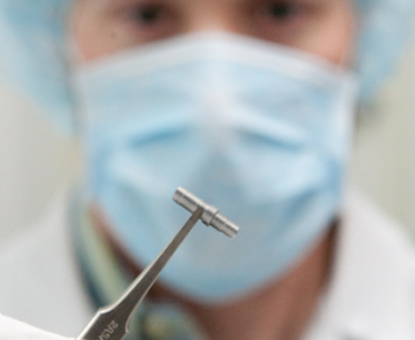 Founded in Santa Barbara, California, in 1987, IntriPlex built its manufacturing discipline in the demanding hard disk drive industry. The company entered fiber optics around 2018 after recognizing an opportunity to apply its stamping expertise to precision metal components within fiber-optic connectors. According to Dexter, IntriPlex was the first manufacturer to develop stamped solutions for certain components and remains the only company capable of stamping some of those designs.
The distinction matters as demand for connectors accelerates. Stamping offers production speed, part-to-part repeatability, scalability and opportunities to reduce manufacturing costs compared with machining. A CNC-machined component takes about five seconds to produce; IntriPlex can stamp approximately 20 parts per second. The difference gives connector manufacturers a substantial throughput advantage, while improving the economics of high-volume production. IntriPlex says its installed stamping infrastructure can support production volumes reaching tens of millions of parts per month. Customers therefore gain a path to greater capacity while maintaining precision.
Engineering the Component around Its Application
IntriPlex approaches component manufacturing as an engineering development challenge, not simply a build-to-print assignment. At its Innovation Center in Santa Barbara, customer engineers work alongside IntriPlex engineers to understand the design parameters and performance objectives behind a component. The team can take a customer drawing into its lab, replicate how the component functions within the connector and conduct mechanical and field-type performance testing.
The focus is not limited to checking whether a part matches a drawing. Engineers examine how the component contributes to the finished connector, identify the attributes that most influence performance, and establish manufacturing parameters and inspection controls around them. Where the application requires it, IntriPlex can apply tighter controls than those initially specified in the customer drawing.
-
What we provide to the markets we serve is a way of stamping components that have never been stamped before.
Design, tooling, fabrication, testing and high-volume manufacturing sit within one organization. Customers can therefore work through development and production with a single engineering and manufacturing partner instead of coordinating with separate suppliers.
One global fiber optic connector supplier approached IntriPlex seeking greater consistency and better economics. The customer had traditionally relied on machined parts and had not considered high-speed stamping. IntriPlex developed a stamped solution that the customer incorporated into its connector design. It subsequently became a leading supplier, while the customer’s products benefited from the performance and economics of the new components and were specified for new AI data center projects.
Making Machined Designs Ready for Stamping
Traditional stamping suppliers often receive components designed for stamping from the outset. IntriPlex works from drawings originally specified for machining and investigates whether its engineers can develop a stamped solution that satisfies the performance requirements of the finished connector. That ability reflects its role as a technology and engineering company developing manufacturing methods for demanding applications.
Quality control supports the transition. IntriPlex develops custom metrology, gauges and inspection methods around them. Its quality team identifies the features that most influence application performance and establishes tight production controls around them. The company maintains ISO certification and the production controls expected of manufacturers.
IntriPlex’s U.S. manufacturing base provides another consideration for connector manufacturers. Customers seeking domestic supply can work with a company headquartered in California, while access to overseas facilities provides flexibility for international manufacturing requirements and different sourcing strategies.
As fiber optic infrastructure evolves, IntriPlex continues to invest in manufacturing technology and capacity. Its goal is to work with customers developing next-generation connectors that demand greater production scale while maintaining precision. By combining application engineering with high-volume stamping, IntriPlex gives connector manufacturers a way to reconsider components once treated as machining-only parts. That capability underpins its recognition as Energy Business Review’s Top Fiber Optic Component Manufacturing Solutions 2027.
Production Capacity Changes the Fiber Optic Supplier Decision
A connector design can be ready for release while the metal parts inside it still depend on machining cycles that cannot scale as quickly. Data center construction keeps pushing connector demand up, and a good unit price offers little comfort if a supplier has to buy new equipment before it can fill the next order. Purchasing teams need a clear picture of how each part will be made at the volume they require. An approved sample shows what a supplier can make once. It does not prove what the supplier can deliver in the months ahead.
The manufacturing method sets both the cost and the limit on output. Machining handles intricate geometries well, but higher volumes usually mean more machines and more floor space. Precision stamping runs faster and repeats reliably on suitable parts, although tooling costs and geometric limits can rule it out for some designs. A sound comparison looks at projected order volumes next to tooling investment and part yield. Quotes built on different methods can follow very different cost curves once demand climbs.
A supplier’s stated monthly capacity may hide how much of it is already spoken for. Connector manufacturers facing larger orders need to know whether extra production can run on equipment already in place and how fast qualified output could rise. Adding a shift is a very different matter from bringing a new machining line online. Any promise of capacity should rest on real throughput at the specified geometry and quality level. Peak machine speed says little about how many acceptable finished parts will actually arrive.
“IntriPlex Technologies makes metal components for fiber optic connectors through high-speed precision stamping, drawing on roughly four decades of experience in hard disk drive components.”
Performance at the connector level brings a separate risk. A metal part can match its drawing and still behave differently once it sits alongside other components. Retention under mechanical load or movement during use can reveal weaknesses that dimensional checks overlook. Manufacturers that can recreate connector conditions in a lab are able to work with design engineers on the attributes that count in real use. Buyers should find out whether testing reflects the finished assembly and whether the results feed into component design before full production begins.
Large production runs bring their own challenge. Small shifts in forming conditions can affect parts across many cycles, even after earlier samples passed inspection. Evaluation should cover process control limits and verification methods, including how a supplier holds results steady as tools wear. Consistent production data counts for more than a handful of lab measurements. Design changes also need a controlled path back into qualified production, particularly as connectors grow denser.
Geography starts to matter once deliveries cross regions. Domestic production can make some handoffs simpler, while international operations can support broader programs. Neither setup replaces clear ownership of production transfers. Executives should confirm where the proposed part will be made and how engineering support will work when requirements change.
IntriPlex Technologies makes metal components for fiber optic connectors through high-speed precision stamping, drawing on roughly four decades of experience in hard disk drive components. Its equipment runs at around 300 parts per minute and supports monthly output in the tens of millions. The company does not stop at customer drawings. At its Santa Barbara Innovation Center, it recreates connector use conditions and carries out mechanical testing. IntriPlex Technologies tests how its stamped metal components perform within the customer’s connector assembly, then adjusts manufacturing controls around the attributes that affect performance. A California base and global operations allow it to serve customers across markets. Connector manufacturers scaling up production gain a partner that qualifies stamped metal parts against the performance requirements of the finished assembly.
...Read more
Fiber Optic Component Manufacturing Solutions Info
Q1
How Does IntriPlex Technologies Approach Fiber Optic Component Manufacturing Solutions?
IntriPlex Technologies applies high-precision metal stamping to components used in fiber-optic connectors, including parts traditionally produced through machining. Founded in Santa Barbara, California, in 1987, the company brought its manufacturing experience from the hard disk drive industry into fiber optics around 2018. Its Fiber Optic Component Manufacturing Solutions focus on adapting component designs for stamping while preserving the functional requirements of the finished connector. This approach gives manufacturers another route to producing precision metal parts at higher volumes.
Q2
What Do Fiber Optic Component Manufacturing Solutions Typically Include?
Fiber Optic Component Manufacturing Solutions can cover component engineering, tooling, fabrication, inspection and production planning. The work begins with understanding how a metal part functions within the connector, rather than treating its drawing as the only measure of success. Depending on the design, manufacturers may need dimensional controls, mechanical testing and repeatable forming processes. Bringing these activities together helps keep component requirements connected to the performance and manufacturability of the final assembly.
Q3
How Can Stamping Improve Production of Fiber-Optic Connector Components?
For suitable geometries, precision stamping can increase throughput compared with machining. A machined component may take several seconds to produce, while a high-speed stamping process can form multiple parts each second. Fiber Optic Component Manufacturing Solutions built around stamping can therefore help address rising order volumes, production costs and capacity constraints. The method is not appropriate for every design, so engineering teams must assess geometry, tooling investment, part quality and expected demand before selecting a process.
Q4
What Engineering Checks Matter When Qualifying Fiber Optic Components?
Qualification should consider how a component performs inside the connector, not only whether it matches specified dimensions. Mechanical behavior, fit and consistency across production runs can affect the completed assembly. Effective Fiber Optic Component Manufacturing Solutions use testing and inspection methods that reflect the part’s intended application. Buyers should examine how suppliers identify performance-critical features, validate them under relevant conditions and maintain controls as production scales or design requirements change.
Q5
How Does IntriPlex Support Component Development and Production?
At its Santa Barbara Innovation Center, IntriPlex works with customer engineers to review designs, replicate component function within connectors and conduct mechanical and field-type performance testing. Its capabilities bring design, tooling, fabrication, testing and high-volume manufacturing within one organization. The company also develops custom metrology, gauges and inspection methods around important component features. This combination supports Fiber Optic Component Manufacturing Solutions that connect early engineering decisions with production controls.
Q6
What Should Manufacturers Evaluate When Choosing a Fiber-Optic Component Partner?
Manufacturers should compare production capacity, quality systems, engineering support, geographic footprint and the supplier’s ability to maintain output as demand changes. A stated machine speed does not by itself establish the volume of acceptable parts available for delivery. Fiber Optic Component Manufacturing Solutions should be assessed against actual throughput, process repeatability, tooling requirements and the performance needs of the connector. IntriPlex has manufacturing operations in the United States and Thailand, giving customers options for domestic and international production needs.
Company
IntriPlex Technologies
Management
David Dexter, President & Managing Director
Description
IntriPlex Technologies develops precision metal stamping and forming solutions for demanding fiber-optic applications, integrating engineering, tooling, quality control, and high-volume production.
