

Thank you for Subscribing to Energy Business Review Weekly Brief


 Dr. Diego Nicolás dell’Erba, Managing Director
A premium connection earns its name in the oil well, not on the drawing board. Once it is down there, the joint has to carry tension and compression, hold back pressure from inside and out, and handle the torque of running, all while keeping a gas-tight seal. For oil country tubular goods (OCTG) manufacturers, doing one of those things well is not enough. The threads, the metal-to-metal seal and the machining must all hold up together under every load.
Finite element analysis (FEA) puts that geometry to work on screen. Engineers fine-tune the thread and seal interferences and check how each size responds to the loads, so manufacturers see problems while they are still cheap to fix. It also lets the team weigh structure against sealing, since a change that benefits one aspect can affect another, such as shifting the contact pressure that holds the seal. By the time specimens reach the machine shop, the design has already been through its paces.
That is where RATIO Engineering excels. Plenty of producers have a premium connection of their own, or want to develop one, but lack an in-house engineering team to develop it. RATIO Engineering steps into that gap and helps with solutions before money is spent on test specimens and full-scale qualification.
The conversation usually starts with a simple question about what the connection needs to handle. Tension, compression, pressure and torque all go on the list, sometimes across a whole range of sizes. Its Argentina-based team builds the geometry around those numbers, whether the manufacturer is starting from scratch or wants a second opinion on an existing design.
Where RATIO Engineering really sets itself apart is in how it reads the seal. A simulation produces plenty of data, but the tough question for any manufacturer is whether the seal will hold.
The most important aspect of dope-free technology is having a dry lubricant layer applied at the mill that allows multiple make-up and break-out operations without reapplying the lubricant.
Beyond analyzing stresses and deformation, RATIO Engineering uses sealing indicators developed through years of research connecting numerical analysis with full-scale testing.
“These indicators help us evaluate how metal-to-metal sealing interfaces behave under different loading conditions, supporting more informed design decisions before physical qualification,” says Dr. Diego Nicolás dell’Erba, managing director.
The same approach works for a connection already in a producer’s catalog. Manufacturers can bring an existing design, learn whether it delivers the efficiencies it claims, and see how its seal is likely to behave under load before anyone plans a test program.
RATIO Engineering also undertakes mechanical and structural analysis for components and devices beyond threaded connections. This broader capability draws on the same engineering discipline of understanding the geometry, evaluating how a component responds to applied loads and translating the results into information that supports practical decisions.
Turning Design Intent into Qualification Readiness
A project involving a 9⅝-inch 53.5 ppf pipe illustrates how RATIO Engineering translates connection requirements into a design that can be evaluated for qualification. The manufacturer required a gas-tight premium connection designed to achieve the pipe body’s rated tensile and compressive capacities while meeting internal and external pressure requirements, with the design intended for qualification under API 5C5.
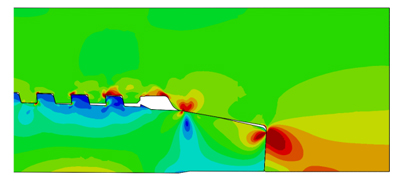
RATIO Engineering developed a coupled connection featuring a specially shaped hooked thread, an internal metal-to-metal seal and a backup shoulder. The team used FEA to evaluate the connection’s structural response and refine the thread and seal geometry. It also examined seal-contact pressure through the loading sequence associated with Connection Assessment Level IV, assessing how the sealing interface responded as the applied loads changed.
Within a few months, RATIO Engineering delivered the evaluated connection design and manufacturing drawings, along with support for specimen and test preparation. This gave the manufacturer a defined engineering package to advance into the next stage of development and physical qualification. The outcome demonstrates how it connects design analysis with the practical work needed to prepare a premium connection for independent testing.
 Clients are also advised on selecting an appropriate test program, preparing specimens and evaluating preliminary make-up and break-out performance. Depending on the application, testing may follow API RP 5C5 or ISO 13679. Independent laboratories conduct the applicable full-scale tests and issue the reports that provide physical evidence of connection performance.
RATIO Engineering’s analysis helps manufacturers refine a design and prepare for that process; it does not replace independent testing. This distinction allows it to support qualification readiness while keeping engineering evaluation separate from final physical verification.
Engineering Connections for Production and Field Use
A premium connection must be practical to manufacture as well as capable of meeting its structural and sealing requirements. Machining time is a major contributor to connection cost, making production efficiency an important consideration from the design stage onward. RATIO Engineering evaluates manufacturing parameters and identifies opportunities to reduce machining time while preserving the geometry, tolerances and sealing characteristics on which performance depends.
Recently added machining expertise and production-support capabilities help customers improve the manufacturing efficiency of their own connection designs. This strengthens its ability to support manufacturers beyond engineering analysis while keeping its principal focus on specialized connection development and optimization.
-
Beyond analyzing stresses and deformation, RATIO Engineering uses sealing indicators developed through years of research connecting numerical analysis with full-scale testing.
Demand for dope-free connections is driven by both environmental requirements and the need to simplify field operations. In some applications, restrictions on conventional compounds increase the importance of connection designs that can operate without repeated grease application.
 Dope-free connection technology, however, presents a different engineering challenge. Conventional connections require storage compounds to be removed and running grease applied before use, with further cleaning and lubrication often needed after break-out. A dry coating applied during manufacturing can simplify field preparation, but it must retain sufficient lubricity through repeated make-up and break-out cycles without being renewed. RATIO Engineering evaluates the tribological behavior of the coating and its interaction with the connection’s threads and sealing surfaces, helping manufacturers assess whether the field benefits can be achieved without compromising performance.
“The most important aspect of dope-free technology is having a dry lubricant layer applied at the mill that allows multiple make-up and break-out operations without reapplying the lubricant,” says Dr. dell’Erba.
For the operator, the value can be fewer preparation steps and less handling of conventional compounds at the wellsite. For the OCTG producer, the opportunity is to offer that convenience without weakening reliability. Friction, surface protection and repeated contact must therefore be engineered into the product.
Modeling the Pipe When Field Data Changes the Calculation
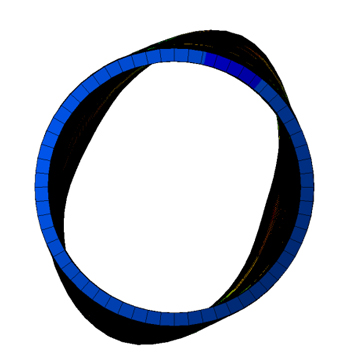
Engineering decisions become more consequential when equipment no longer matches the geometry assumed by standard calculations. In one project, a client needed to assess a deformed section of 13⅜-inch cemented casing at approximately 1,290 to 1,300 meters. RATIO Engineering used internal-diameter measurements taken along 60 circumferential lines, together with wall-thickness data, to build a three-dimensional finite element model in ABAQUS.
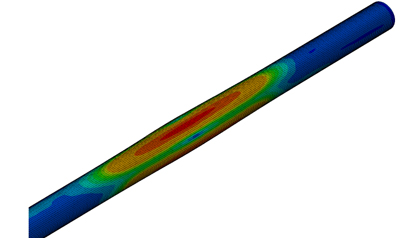 After checking the model against theoretical reference calculations, it simulated external-pressure loading across the measured geometry. The analysis estimated that the affected section’s collapse resistance was approximately 40 to 50 percent below the theoretical reference figures. Going beyond calculations based on the assumed geometry alone gave the client a more realistic basis for assessing the section’s operating limits.
“We use FEA to model the deformed area of the pipe and determine its external pressure resistance, giving the client an indication of the maximum pressure that can be applied without risking the operation,” says Dr. dell’Erba.
Although the case concerned the pipe body rather than a threaded connection, it demonstrates the value of modeling actual conditions when standard calculations may not fully represent the equipment’s geometry.
Built for the Next Requirement
The next challenge is not to simply meet established performance requirements, but to maintain sealing reliability as qualification protocols become more demanding. Dr. dell’Erba points to growing interest in higher torque capacity alongside dependable metal-to-metal sealing. That combination puts greater pressure on engineers to balance connection geometry and seal behavior across different loading conditions.
By bringing specialized premium-connection engineering expertise from Latin America to manufacturers in the region, the U.S. and other major international markets, it helps OCTG producers make better-informed decisions as they develop and refine their own connection designs.
RATIO Engineering’s recognition as the Oil & Gas Connection Solution of the Year in Latin America 2026 reflects the timeliness of its approach to connect engineering analysis with the realities of testing and production.
Assessing OCTG Connections over Rated Performance
OCTG connections are built to handle nominal load ratings—covering pressure, axial loads and repeated assembly. For pipe producers working on their own designs, choosing the right connection involves more than just looking at thread geometry or advertised specs. Engineering teams need to show how their finite element analysis of contact behavior relates to real-world loads, and how those insights shape their physical testing.
There are uncertainties with the metal-to-metal seals themselves. Their performance depends on contact pressure and seal shape and are particularly sensitive to the change from tension to compression in the connection as internal or external pressure on the pipe varies. Knowing the rated strength is not sufficient to predict sealing performance in these cases. Engineering teams need to demonstrate the correlation between real-world loads and their finite element analysis of contact behavior, and how this drives physical testing. This difference becomes even more critical when the higher torque puts additional stress on the design of the connection.
Qualification planning can uncover costly design flaws late in development. API 5C5 and ISO 13679 provide proven methods for assessing connection performance but the extent of testing should be commensurate with the intended use. Evidence produced is affected by specimen preparation, repeated make-up and break-out cycles and laboratory procedures. Early testing can uncover problems before formal qualification but adds cost and time.
The procurement teams need to decide who controls specimen preparation, who coordinates testing and whether an independent laboratory produces the qualification report. Clear assignment of responsibilities reduces the risk of separation of engineering decisions from test findings. Regional procurements are made more complicated by the involvement of cross-border engineering teams and testing laboratories. In all handoffs, you should document design changes and acceptance criteria, particularly if specimen machining is done offsite.
“Ratio Engineering designs and evaluates OCTG connections using geometric modeling, finite element analysis and hands-on engineering support throughout the qualification process.”
Manufacturing costs can really shift how valuable a well-designed connection ends up being. The shape and features of the connection have a big influence on machining time, especially if a company wants to manufacture a whole line of tubing or casing. Even small tweaks to threading details can speed up production, sometimes without affecting performance specs at all. That’s why it’s important to balance production practicality with engineering goals. If the design firm is not strong in machining expertise, producers could end up with tooling headaches after the design is complete.
Dope-free connections change how field prep and surface engineering work together. When you skip traditional running compounds, you spend less time cleaning and use fewer lubricants at the wellsite, which is especially helpful in areas with strict environmental regulations. Still, the dry coating must stay slick through many make-up and break-out cycles because it is not reapplied. With time, the main concern changes from convenience to whether the coating meets qualification standards. But buyers should care about how well the connection holds up over repeated use, not just easier handling.
Ratio Engineering designs and evaluates OCTG connections using geometric modeling, finite element analysis and hands-on engineering support throughout the qualification process. The team looks at both structural performance and metal-to-metal sealing, using analytical data and lessons learned from full-scale tests. They help with specimen preparation and work with independent labs to coordinate testing. Ratio Engineering also examines machining parameters to identify ways to make production faster while still maintaining connection performance. With recent expertise in machining, they now support production planning as well. Their engineering services span from developing proprietary connections to assessing existing designs. Pipe manufacturers seeking external support for connection qualification or manufacturing improvements are their primary clients.
...Read more
Oil and Gas Connection Solutions in Latin America Info
Q1
What Do Oil & Gas Connection Solutions Cover?
Oil & Gas Connection Solutions focus on the threaded connections of oil country tubular goods (OCTG) and the harsh environment to which they are subjected in the ground. These connections must resist tension, compression, internal and external pressure and running torque and maintain a gas-tight seal. This requires more than just good threads; the shape of the thread, the contact of the metals and the machining process need to align as the loads change.
Q2
How Does RATIO Engineering Approach Premium Connection Design?
A new premium connection may be required, or a thorough examination of the existing premium connection design. RATIO Engineering assists with both, in designing connection geometry to specific loads and sizes. Finite element analysis (FEA) is used by engineers to understand the behaviour of the design under stress. They also employ sealing indicators that are created by numerical analysis and full-scale testing. This method can detect design problems prior to manufacturers investing time and money in test samples and qualification.
Q3
Why Does Seal Performance Matter in Oilfield Connections?
A joint may be able to absorb one load quite easily, but struggle to maintain a gas tight seal when multiple loads are applied simultaneously. Oil & Gas Connection Solutions must take into account the effects of contact pressure as tension, compression, pressure and torque vary. Engineers consider the influence on the shape of the thread and on the sealing surfaces, as improvements in one may have an impact on the other. Taking these into consideration in the design phase will make it less likely that problems will be seen during physical testing.
Q4
What Should Manufacturers Know Before Qualifying a Connection?
Qualification starts with clearly defined performance objectives and test plan appropriate to the application. These Oil & Gas Connection Solutions may include design reviews, assistance in preparing test samples, and guidance on appropriate testing protocols. Tests may be conducted based on API RP 5C5 or ISO 13679, depending on the nature of connection and its use. Full-scale testing is conducted by independent testing labs and reports are issued. Engineering analysis can take a design to the test, but cannot be a substitute for physical testing.
Q5
How Does RATIO Engineering Assess Existing Connection Designs?
Just as much attention as new designs is required for existing products, particularly when a manufacturer is looking to know how the seal will perform under load or if production goals will be met. RATIO Engineering tests these products for them and verifies the thread and seal shapes, stress, deformation and manufacturing details. The team search for reducing the machining time without compromising the tolerances and sealing quality. This is a way of linking the design review directly to the actual cost and consistency of making the link, rather than production being an after-thought
Q6
What Engineering Considerations Shape Dope-Free Connections?
Applying a dry lubricant during manufacturing can cut down on the need to use traditional running compounds at the wellsite. However, the coating has to stay slippery through many make-up and break-out cycles. Oil & Gas Connection Solutions for dope-free designs focus on friction, surface protection, and how the coating interacts with threads and sealing surfaces. The goal is to make field preparation easier without sacrificing the connection’s performance over time.
Company
RATIO Engineering
Management
Dr. Diego Nicolás dell’Erba, Managing Director
Description
RATIO Engineering specializes in OCTG connection design, finite element analysis, performance assessment, and qualification support for oil and gas producers worldwide. The company also helps optimize sealing performance, manufacturing productivity, and connection reliability under demanding operating conditions.
